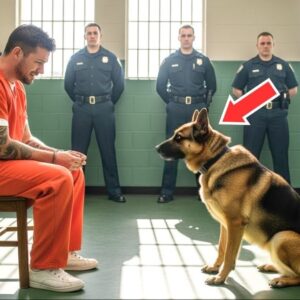
Many dog owners swear their pet can instantly tell whether someone is “good” or “bad.” While that idea might sound emotional or even superstitious, science suggests there’s actually some truth behind it—just not in the way people usually think.
Dogs don’t judge morality the way humans do. They aren’t deciding if someone is a “bad person” in a social or ethical sense. Instead, they are incredibly skilled at reading behavior, body language, and emotional cues. Dogs have evolved alongside humans for thousands of years, and their survival has depended on understanding human intentions quickly and accurately.
One key factor is body language. Dogs notice subtle signals—posture, movement, tension—that humans often miss. Someone who appears nervous, aggressive, or unpredictable may trigger a dog’s caution. On the other hand, relaxed and friendly body language tends to make dogs feel safe.
Another major factor is scent. Dogs have an extraordinary sense of smell, far beyond human capability. They can detect changes in hormones like adrenaline and cortisol, which are released when a person is stressed, anxious, or angry. Even if someone looks calm on the outside, a dog may pick up on what’s happening internally.
Studies have also shown that dogs can observe how people treat others. In experiments, dogs were less likely to accept food from individuals who acted unfairly or refused to help their owner. This suggests that dogs can form impressions based on social interactions, not just direct experience.
So when a dog reacts negatively to someone, it doesn’t necessarily mean that person is “bad”—but it does mean the dog is sensing something unusual or uncomfortable, whether it’s tension, unfamiliar behavior, or even subtle emotional signals.
In short, dogs don’t have a moral compass like humans—but they do have something just as powerful: an instinctive ability to read people in ways we often overlook.