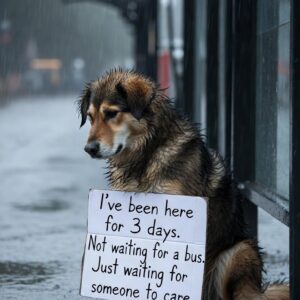
The first night, people assumed he was lost.
By the second night, they realized he wasn’t wandering.
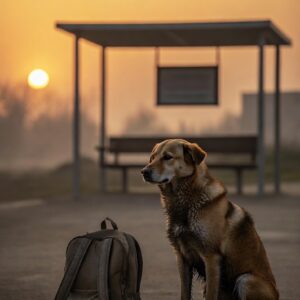
He was waiting.
The small rural town had been hit by a sudden snowstorm. Roads were slick. Visibility was low. The last bus of the evening had passed hours earlier, yet the dog remained at the wooden bus shelter, standing beneath the single streetlight.
He wasn’t pacing.
He wasn’t barking.
He simply watched the road.
A local driver recognized him on the third evening. The dog belonged to an older man who took the evening bus into town every weekday to visit his wife at a long-term care facility.
That week, the man hadn’t come home.
Neighbors later learned he had suffered a medical emergency while visiting the facility and had been admitted to the hospital in the city. There was no one to bring the dog.
But the dog didn’t know that.
Every evening around the same time, he walked from the house to the bus stop and waited for the headlights he had memorized.
When temperatures dropped dangerously low, a nearby family finally brought him inside for the night. They contacted authorities and eventually located the owner’s relatives.
The man recovered slowly.
When he returned home weeks later, the first thing he asked about wasn’t his house.
It was his dog.
The reunion happened at the same bus stop.
This time, the headlights stopped.
And the waiting ended.