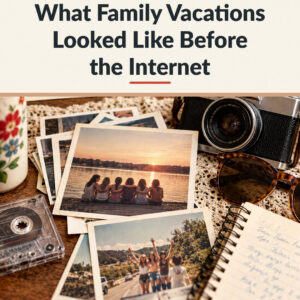
Before GPS directions and hotel-review apps, family trips often began with a road atlas spread across the table. There were brochures to collect, bags to pack, and a list of towns someone hoped to visit. Planning could be frustrating, but it also made departures feel like an event. Here is a look back at the details that shaped vacations for many American families.
Paper maps spread across the dashboard
An atlas or folding state map was a road-trip essential. Someone in the passenger seat might navigate by highway number, distance markers, and towns on the horizon. A missed turn occasionally became an entirely new adventure.
Packing the cooler and the sandwiches
Families saved money by filling a cooler with drinks, fruit, sandwiches, and snacks. Picnic areas and roadside rest stops offered a chance to stretch, eat, and look at the scenery.
Roadside motels and glowing vacancy signs
Rather than comparing dozens of online listings, travelers sometimes stopped at a motel because its sign promised a room and the price seemed fair. Amenities and standards varied, and a decent bed at the end of a long drive felt especially welcome.
Postcards mailed from every destination
A postcard offered a small way to tell friends and relatives where the family had been. A few handwritten lines and a colorful picture could preserve a trip far longer than the vacation itself.
Travel photographs on film
A roll of film held a limited number of pictures, so someone had to decide when to take the shot. Vacation memories came home on negatives and prints, sometimes with a thumb accidentally covering part of the lens.
Souvenir shops and unusual roadside attractions
Giant statues, odd museums, overlooks, and little gift stores competed for travelers’ attention. An unexpected stop could become the story everyone retold for years.
Arguments about the route
One person wanted the quickest highway while another preferred scenic roads. When children grew restless in the back seat, parents had to invent entertainment without handing over a tablet.
License-plate games and singalongs
Looking for plates from every state, playing twenty questions, and singing along to the radio helped pass the miles. Many children also watched the landscape change through the car window.
A call home from a pay phone
When plans changed, families might use a hotel phone or roadside pay phone to let relatives know they had arrived. Staying in touch required more planning than sending a quick message today.
The pleasure of a surprise discovery
With fewer online photographs and reviews, a beautiful view or unexpectedly good restaurant could feel like a genuine discovery. The uncertainty was not always easy, but it sometimes made travel memorable.
Why It Still Matters
Modern trip planning offers real advantages in safety and convenience. Still, the old road-trip spirit is easy to recover: leave room in the itinerary, choose an interesting detour, and spend part of the journey simply noticing what is around you. What family vacation do you remember most clearly?
Cover artwork is an AI-generated editorial illustration, not an archival photograph.