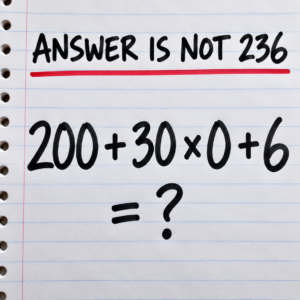
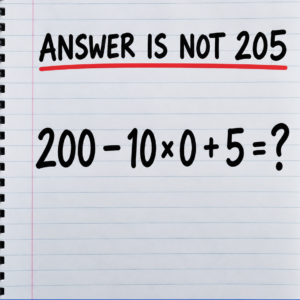
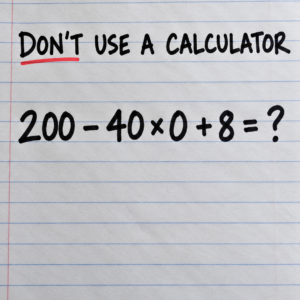
Here’s a mental-math question that seems easy: 200 + 60 × 0 + 9 = ? The image tells readers the answer is not 200. Let’s see why.
The correct answer is 209
Under the standard order of operations, you always carry out multiplication before addition. So the first step is 60 × 0 = 0.
The original expression now becomes 200 + 0 + 9. Adding zero leaves 200 unchanged, but you still need to add nine. The final answer is 209.
Why isn’t the answer 200?
It’s easy to focus on the multiplication by zero and stop calculating too early. But the final nine remains part of the expression. Even though sixty times zero contributes nothing, adding nine to two hundred changes the result.
Remember the multiplication-first rule
When a problem contains both multiplication and addition, perform the multiplication first. Then add the remaining terms. This straightforward rule makes short trick questions much easier to solve.
If you reached 209 without a calculator, you got it right. Try it on a friend and see whether they notice the extra nine.