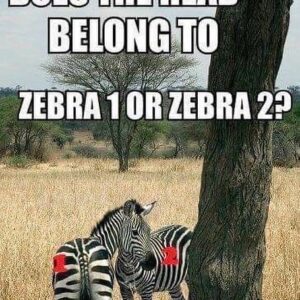
At first glance, this image looks simple: two cows standing side by side, labeled A and B. But the real question quickly turns it into a debate—whose head is it?
Many people instinctively choose one side within seconds. Some say the head belongs to cow A, while others are convinced it must be cow B. The confusion comes from how the bodies overlap and how our brains try to match shapes quickly.
If you look more closely, subtle clues begin to appear. The alignment of the neck, the direction of the body, and the positioning of the shoulders all play a role in identifying the correct answer.
Cow A is facing slightly away, with its body angled differently, while cow B is positioned more directly in line with the head. The head aligns more naturally with cow B’s body structure and stance.
This illusion works because our brains prioritize quick pattern recognition over detailed analysis. We see what seems to fit first, rather than what actually makes structural sense.
That’s why opinions are often split.
The correct answer is B.
But what makes this image interesting isn’t just the answer—it’s how easily our perception can be tricked by a single angle.