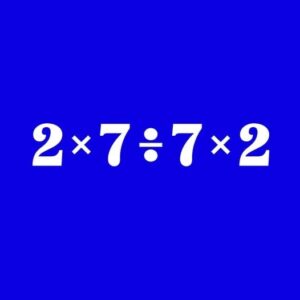
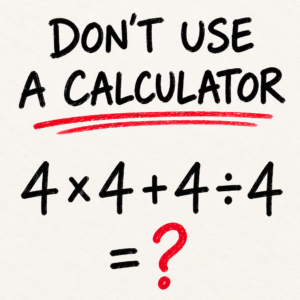
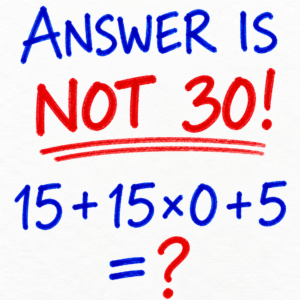
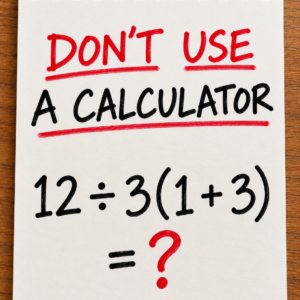
At first glance, this looks like one of the easiest math problems you’ll ever see: 200 + 200 × 5. Most people immediately feel confident and rush to answer it—but that’s exactly where things go wrong.
The common mistake is doing the addition first. Many people quickly add 200 + 200 to get 400, then multiply by 5 and land on 2000. It feels logical, fast, and satisfying—but it completely ignores one crucial rule in mathematics: order of operations.
In math, multiplication always comes before addition. That means you must calculate 200 × 5 first, which gives 1000. Only after that do you add the remaining 200, resulting in the correct answer: 1200.
What makes this problem so interesting is how predictable the mistake is. When numbers look simple, people tend to rely on instinct instead of rules. The brain tries to save time, but in doing so, it skips the very step that ensures accuracy.
This is why puzzles like this go viral—they’re not difficult, but they expose how easily we overlook fundamentals. It’s not about intelligence; it’s about attention.
So the real question is… did you slow down and follow the rules, or did you rush and fall into the trap?