Can You Solve This Simple Math Problem? Most People Get It Wrong

This looks like one of the easiest math problems you’ll see today… but don’t be fooled.

The equation is:

3 + 3 × 2 – 3

At first glance, many people instantly try to solve it from left to right. It feels natural. It feels fast. And it’s exactly why so many people end up with the wrong answer.

The real trick behind this problem is understanding how math actually works — not how it looks.

There’s a rule that changes everything: the order of operations. Without it, math would be inconsistent and unpredictable. With it, every equation has a clear and correct path.

3 + 3 × 2 – 3

= 3 + (3 × 2) – 3

= 3 + 6 – 3

= 6 ✅

In this case, multiplication comes before addition and subtraction. That means you can’t just go step-by-step from the beginning — you have to pause and identify what needs to be solved first.

This tiny detail is what makes such a simple problem surprisingly tricky.

Most mistakes happen because people rush. They trust instinct instead of structure. And that’s exactly what this question is designed to test.

It’s not about intelligence — it’s about attention to detail.

So the real question is…

Did you slow down and follow the rules, or did your brain try to take a shortcut? 😏
Related Posts

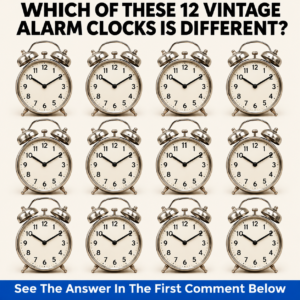
Which of These 12 Vintage Alarm Clocks Is Different?

Second row, third clock. Take a close look at the numbers around the face. In the second row, third clock, the number at the top is an 11 instead of the usual 12. This small printing difference makes it the odd one out.

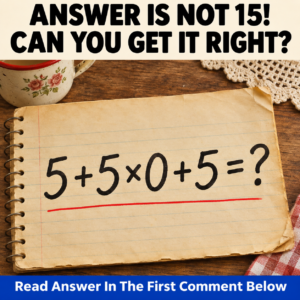
Answer Is Not 15! Solve 5 + 5 × 0 + 5

10. Follow the standard order of operations: multiply first, then add. Since five multiplied by zero equals zero, the expression becomes 5 + 0 + 5, which equals 10. Adding first would lead to the wrong answer.

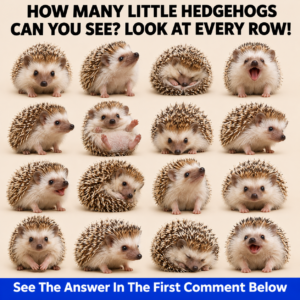
How Many Little Hedgehogs Can You See? Look at Every Row!

16 hedgehogs. Four hedgehogs appear in each of four rows. A few are curled into balls, and others face different directions, but every animal counts once. Four rows of four equal sixteen.

What Has One Eye but Cannot See Anything? Riddle Answer

A needle. The tiny hole through which thread passes in a sewing needle is called its eye. Even though it has an ‘eye,’ a needle cannot see. The riddle relies on two meanings of the same word.

One of These 12 Vintage Clothespins Is Different. Can You Find It?

Third row, second from the left. Most clothespins have a tapered wooden tip at the right. The second clothespin in the bottom row instead has a more squared-off end. Scan from left to right and compare the shapes to find the diffe

102 Today and Still Have a Reason to Smile: A Birthday Tribute

Celebrating 102 years. The image is an illustrative birthday tribute of an older woman holding a sign reading 102 today. It celebrates the beauty of growing older and finding reasons to smile, whether in family, friendship, memori