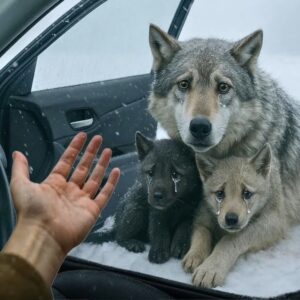
When the ranger first spotted the animal wandering near the tree line, he assumed the worst. Wolves had been reported in the area for weeks, and farmers were growing anxious. But something about this one felt different.
It didn’t run when he approached. It didn’t bare its teeth. Instead, it stood still, watching him as if it were waiting for help.
Concerned it might be injured, the ranger carefully guided the animal into a transport crate. Up close, he noticed how thin it was — ribs faintly visible beneath its thick fur. This wasn’t a predator hunting livestock. This was an animal struggling to survive.
Back at the station, a closer examination revealed the truth. The “wolf” was actually a lost dog — likely abandoned months earlier. Its wild behavior wasn’t aggression; it was fear.
After food, rest, and gentle care, the dog’s personality began to change. Within days, its tail wagged again. Within weeks, it trusted humans enough to lean into their touch.
Soon after, a family searching for a companion visited the shelter. The moment their child sat beside the once-misunderstood animal, it quietly placed its head in the child’s lap.
Sometimes the creatures we fear most are simply waiting for someone to see them clearly.