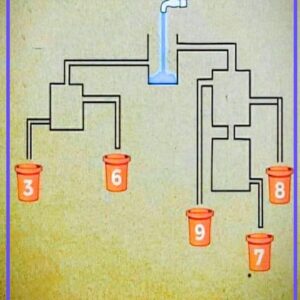
At first glance, the image looks simple: a coffee pot pouring into a system of pipes that lead to six cups labeled A through F. The challenge is straightforward — pick the cup you think will fill first.
But puzzles like this aren’t really about coffee or cups. They’re about perception. They test how people process information, what they notice first, and how they interpret cause and effect.
That’s why visual puzzles like this often go viral. They don’t require advanced math or technical knowledge. Instead, they invite intuition, observation, and a bit of personality.
So before reading further, take a moment and choose the cup you believe will fill first.
Your choice may reveal more about how you think — and how you relate to the world around you.
The Logic Behind the Puzzle
Many people immediately focus on the most direct path from the coffee pot. Others scan the entire structure, looking for blocked routes or hidden gaps. Some rely on instinct, while others analyze every connection carefully.
This difference in approach is what makes the puzzle interesting. It reflects whether someone tends to prioritize speed, detail, confidence, or caution in decision-making.
While no single answer can diagnose personality traits, the choice often mirrors common thinking patterns.
Here’s what your choice may suggest.
If You Chose Cup A
You tend to trust your first impression. You act quickly and confidently, often believing the most obvious answer is correct. This doesn’t make you self-centered — it usually means you’re decisive and comfortable trusting your judgment. Others may see you as bold and direct.
If You Chose Cup B
You prefer balance. You’re not rushing to conclusions, but you’re also not overthinking every possibility. You value practicality and fairness, often considering both logic and emotion before deciding. People may view you as grounded and dependable.
If You Chose Cup C
You notice details others miss. You likely scanned the entire diagram before choosing. This suggests patience, curiosity, and a tendency to question assumptions. You enjoy understanding how things work rather than accepting surface-level explanations.
If You Chose Cup D
You think strategically. Instead of focusing on what’s closest, you consider how systems connect and interact. You may be someone who plans ahead and thinks long-term, often weighing consequences before acting.
If You Chose Cup E
You tend to think independently. You’re comfortable challenging obvious answers and looking for alternatives others ignore. This often reflects creativity and self-confidence rather than self-absorption.
If You Chose Cup F
You’re observant and cautious. You probably noticed that some paths may be blocked or misleading. This suggests you prefer careful analysis over quick reactions. People may see you as thoughtful and perceptive.
So… Does This Mean Someone Is a Narcissist?
Not really.
Puzzles like this are meant to spark curiosity and conversation, not diagnose personality traits. Real narcissism is a complex psychological pattern involving empathy, relationships, and behavior over time — not a single visual choice.
What this puzzle really shows is how people think differently when faced with uncertainty. Some rely on instinct. Others on analysis. Neither is right or wrong — they’re just different ways of navigating the world.
So which cup did you choose?