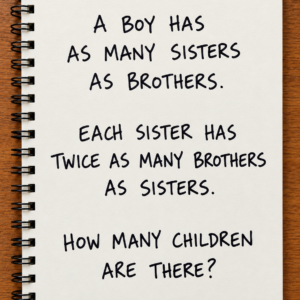
This family riddle looks like a counting problem, but the wording is designed to make you overcount.
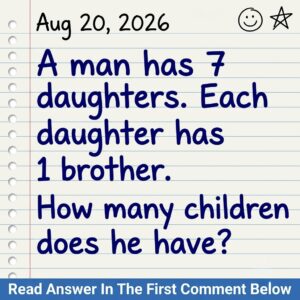
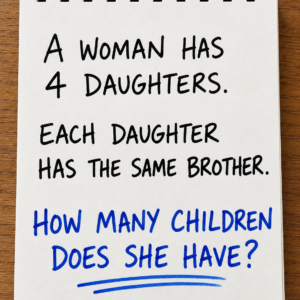
A man has 5 daughters, and each daughter has 1 brother. The key question is whether each daughter has a different brother or whether they all share the same one.
Because they are sisters in the same family, the natural reading is that all five daughters share one brother.
So the total number of children is:
5 daughters + 1 brother = 6 children.
Answer: 6.
The trap is assuming there must be five brothers, one for each daughter. But the sentence never says they have different brothers.
Did you say 6 right away, or did you count 10?