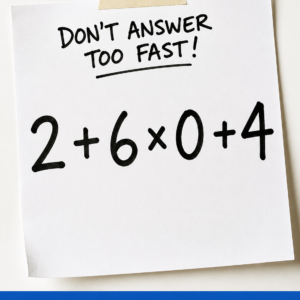
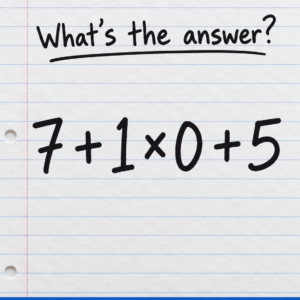
At first glance, 6 + 6 ÷ 6 + 6 may look like a simple left-to-right problem, but the order of operations matters. Division must be completed before addition.
Start with 6 ÷ 6, which equals 1. The expression then becomes 6 + 1 + 6. Adding those numbers gives 13.
So the correct answer is 13.
A common mistake is to add the first two 6s before dividing, which changes the structure of the equation and produces a different result. Another mistake is treating every operation as if it had the same priority.
The quickest way to avoid errors is to identify multiplication and division first, solve them, and only then finish the addition or subtraction. If you answered 13, you applied the order of operations correctly.