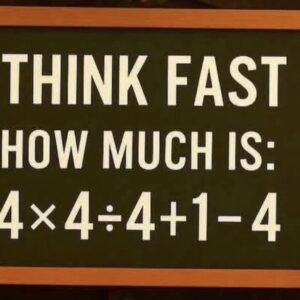
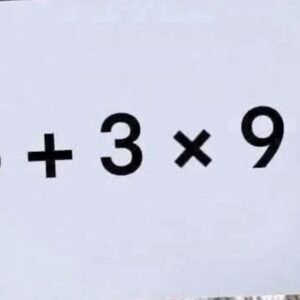
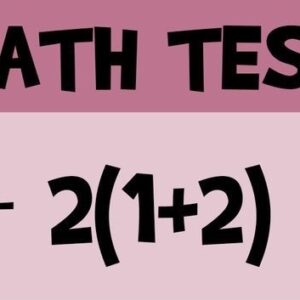
At first glance, this looks like one of the simplest math problems you could ever see: 400 + 400 ÷ 4. The title even says “Easy Math,” which makes people feel confident before they even start. But that confidence is exactly why so many get it wrong.
The most common mistake is rushing straight into addition. Many people instinctively do 400 + 400 first, getting 800, and then divide by 4 to get 200. It feels natural, quick, and satisfying—but it’s completely wrong.
The key here is understanding the order of operations, a basic rule in mathematics that tells us exactly how to solve expressions like this. According to this rule, division comes before addition. That means you must calculate 400 ÷ 4 first, which gives 100. Only after that do you add the remaining 400, leading to the correct answer: 500.
What makes this problem interesting isn’t the math—it’s how our brains work. When something looks “easy,” we tend to skip steps and trust our first instinct. But math doesn’t reward speed—it rewards precision.
This is exactly why puzzles like this go viral. They’re simple enough for everyone to try, but tricky enough to expose how often we overlook the basics.
So the real question is… did you slow down and follow the rules, or did you rush and fall for the trap?