This Simple Math Problem Is Tricking Everyone — Can You Solve It?

At first glance, this looks like a simple equation you could solve in your head without even thinking. The numbers are small, the structure is basic, and nothing seems complicated.

But that’s exactly what makes it tricky.

The expression is:

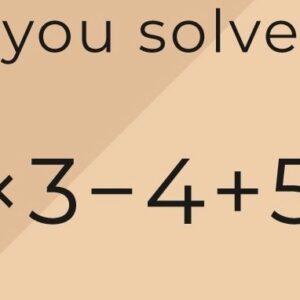
6 + 2 × 2 − 6

Most people instinctively go from left to right. It feels natural—start with 6, add 2, keep going. But that approach leads to the wrong answer.

The key is remembering the order of operations. Multiplication must always be done before addition and subtraction, no matter how simple the equation looks.

So instead of rushing, slow it down.

Start with the multiplication:

2 × 2 = 4

Now rewrite the expression:

6 + 4 − 6

Next step:

6 + 4 = 10

And finally:

10 − 6 = 4

👉 Final Answer: 4
Related Posts

How Many Sevens Can You See?

This number-counting puzzle contains more sevens than most people notice at first glance. Start with the large red digits: Top row: 3 sevens Second row: 2 sevens…

How Many Dots Do You See? The Correct Answer Is 15

This dot-counting puzzle contains more than the nine large blue dots shown in the center. Start with the obvious dots: 9 blue dots Now look closely at…

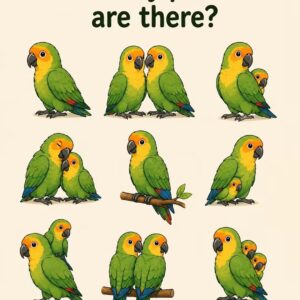
How Many Cockatoos Can You See? The Correct Answer Is 22

This bird-counting puzzle looks like it contains only nine cockatoos, but several smaller birds are hidden inside the larger drawings. Count each group carefully from left to…

How Many Dogs Can You See? The Correct Answer Is 20

This dog-counting puzzle is trickier than it first appears. The image suggests there may be only 10 dogs, but several smaller puppies are hidden between the larger…

How Many Numbers Can You See? Hidden Number Puzzle Answer Explained

This hidden-number puzzle combines several digits inside one overlapping drawing. At first glance, most people immediately notice the numbers 6, 8, 4, and 1. However, the curves,…

6 × 0 + 6 ÷ 6 + 6 Answer Explained: Can You Solve This Math Puzzle?

The expression 6 × 0 + 6 ÷ 6 + 6 must be solved using the correct order of operations. Complete multiplication and division first: 6 ×…