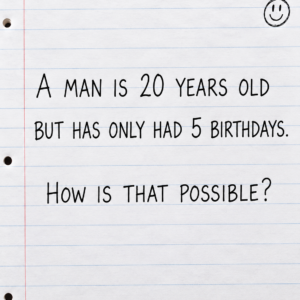
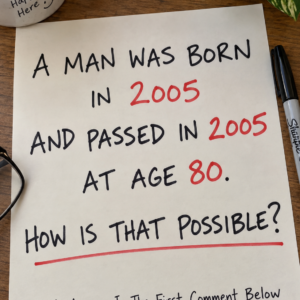
This simple-looking riddle says a man has two rope ends but only one rope. How can both statements be true at the same time?
The answer is that a single ordinary rope naturally has two ends.
You do not need two separate ropes to have two rope ends. One continuous piece of rope has one end on one side and another end on the other side.
The puzzle works because the wording encourages you to picture “two rope ends” as if they must belong to two different ropes. But there is no contradiction at all. The man simply has one rope, and that one rope has two ends.
It is a classic example of a riddle that becomes easy once you stop adding extra assumptions to the sentence.