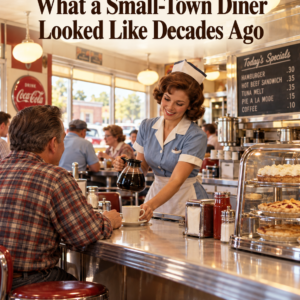
Step into a family kitchen from the 1960s and you may recognize much more than the appliances. The sound of a hand mixer, patterned curtains over the sink, and a stack of recipe cards could make an ordinary afternoon feel like home. Kitchens differed greatly by region, income, and household, but these 15 familiar features tell a vivid story about the era.
1. Colorful refrigerators
Refrigerators were becoming symbols of the modern home. White was common, but pastel and more colorful finishes also appeared in advertising and showrooms. Families increasingly expected enough cold storage for fresh groceries and leftovers.
2. Formica-style tables
Laminate tabletops with easy-wipe surfaces were practical for breakfast, homework, baking, and family conversations. Metal trim and vinyl chairs completed the look in many informal dining spaces.
3. Printed curtains and cheerful patterns
Floral and geometric fabrics softened hard surfaces. Curtains, towels, and tablecloths often provided much of a kitchen’s color, especially where cabinetry remained plain.
4. Metal flour sifters
Before opening a box of ready-made cake mix, many home cooks reached for a hand-cranked sifter to break up flour and combine dry ingredients. The metallic rattle was a familiar baking sound.
5. Stand mixers and handheld beaters
Electric mixers made cakes, cookies, and mashed potatoes easier to prepare. Traditional hand-cranked beaters remained useful too, particularly for smaller jobs.
6. Recipe boxes
Index cards carried handwritten directions, measurements, and family notes. Some recipes were clipped from newspapers or copied from neighbors, leaving a personal trail of meals worth remembering.
7. Casserole dishes
Oven-to-table cookware helped families prepare a filling supper in one dish. Heat-resistant glass and glass-ceramic dishes became especially recognizable in postwar kitchens.
8. Matching canisters
Coffee, sugar, flour, and tea were often stored in coordinated containers. Their designs ranged from flowers and fruit to simple stripes and solid colors.
9. Percolator coffee pots
A stovetop or electric percolator made its presence known with a steady bubbling sound. The coffeemaker could become a part of the morning routine before anyone had spoken a word.
10. Ice-cube trays
Freezer compartments often contained metal or early plastic ice-cube trays, sometimes with a lever to release the cubes. A cold drink could require a bit more effort than it does today.
11. Dish towels with personality
Embroidered towels, printed flour-sack towels, and hand-crocheted details could brighten up the room. They were useful tools as well as small expressions of taste.
12. Cast-iron and aluminum pans
Long before every kitchen had a wall of specialty cookware, sturdy skillets and saucepans handled daily breakfasts, soups, and Sunday dinners. Some have been passed down for generations.
13. The everyday toaster
Simple pop-up toasters were a familiar countertop appliance. Toasted bread and a hot drink could make a quick breakfast on busy mornings.
14. New convenience foods
Frozen vegetables, boxed mixes, and prepared meals expanded the options for many families. The changes were part of a wider shift toward labor-saving products—although cooking and cleaning still took plenty of work.
15. A kitchen that doubled as the family hub
No matter the color of the cabinets, kitchens were places where people gathered, argued, laughed, helped with dishes, and shared news. That everyday human side is what many remember best.
Why It Still Matters
The Smithsonian’s National Museum of American History notes that postwar kitchens were marketed as showcases of progress and new appliances, even though real households varied widely. The most lasting kitchen memories often have little to do with technology: they belong to the people who gathered around the table.
Further Reading
- Smithsonian: Modern Kitchens
- Smithsonian: New Materials, New Tools
- Smithsonian: Abundance and Appliance History
Image note: The featured artwork is an AI-generated editorial illustration, not a historical photograph.