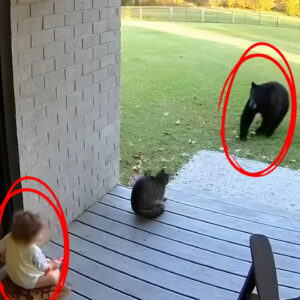
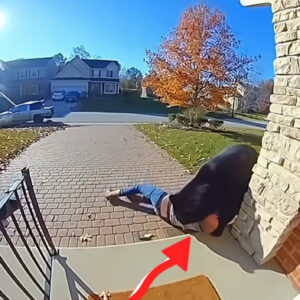
Seeing a black bear outside a front door can feel like something from a dramatic home-security video. In communities near bear habitat, however, porches and yards may become part of an animal’s nightly search for food. A bear on a doorstep does not necessarily mean it is preparing to attack. Understanding what attracts bears—and how to discourage repeat visits—is much more useful than guessing about a single image.
Why a bear might investigate a porch
Bears are remarkably good at following food smells. Outdoor garbage, birdseed, food left for pets, compost, an unclean grill, and fallen fruit can all attract attention. A porch can concentrate those scents. An animal that finds an easy meal may remember the location and return, which creates unnecessary danger for the bear and people nearby.
Why these encounters happen at night
A bear’s activity pattern depends on season, food supply, human disturbance, and the local environment. Some bears visit residential areas when there are fewer people around. A camera may reveal activity that residents otherwise never notice. Darkness does not automatically make the animal more aggressive.
What a homeowner should do
If you see a bear through a window or on a doorbell camera, stay indoors and keep pets and children inside. Do not open the door for a better photograph or try to drive the animal away at close range. Give it room to leave, and contact the local wildlife agency if the animal is threatening people or repeatedly returning.
The biggest mistake: offering food
Even unintentional feeding can train bears to seek out houses. Feeding pets on a porch, storing birdseed outdoors, or leaving a bag of trash overnight can reward an animal for approaching. The BearWise program recommends removing feeders during active bear seasons, cleaning grills, and securing food and waste.
Make your property less inviting
Use bear-resistant bins where appropriate, bring pet dishes indoors, clear ripe fruit, and store food and trash securely. Neighbors should coordinate rather than leaving one unprotected garbage area near several otherwise careful households. If a bear has visited, alert nearby residents without encouraging anyone to approach it.
How to interpret a dramatic camera image
A single image cannot establish the bear’s exact intentions, whether it is the first visit, or whether anyone was actually endangered. Fake or recreated footage should be identified as such. When an encounter really occurs, verified facts from local wildlife officials are more helpful than a sensational caption.
What This Means
Black bears are powerful wild animals that deserve distance and respect. Keeping attractants out of reach makes encounters less likely and helps prevent animals from learning to associate people with easy food.
Sources and Further Reading
Illustration notice: The featured image is AI-generated artwork depicting a hypothetical situation. It is not authenticated security-camera footage or evidence of a specific incident.