99% Get This Wrong Can You Solve It

At first glance, it looks simple.

Just a few numbers. A quick equation. Something most people would assume they can solve in seconds without even thinking twice.

But that’s exactly where people go wrong.

This type of problem isn’t about speed—it’s about how you think.

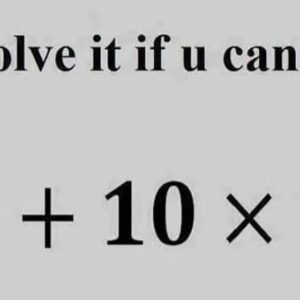
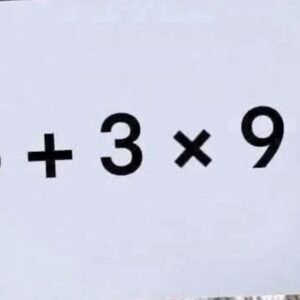
The equation is:

6 − 3 × 5 + 4

Most people instinctively start from left to right. It feels natural. You see the 6 and the 3, and your brain wants to immediately subtract. But math has its own rules—and ignoring them is the reason so many people get tricked.

The key here is understanding order of operations.

Multiplication always comes before addition and subtraction.

So instead of rushing, you pause and handle the multiplication first:

3 × 5 = 15

Now the equation becomes:

6 − 15 + 4

From here, you move left to right:

6 − 15 = -9

-9 + 4 = -5

And just like that, the correct answer appears.

What makes this so interesting is how many people know the rule—but still ignore it under pressure. It’s a perfect example of how quick decisions can lead to simple mistakes.

These little puzzles aren’t really about math.

They’re about attention, patience, and discipline.

And sometimes… slowing down is the smartest move you can make.
Related Posts

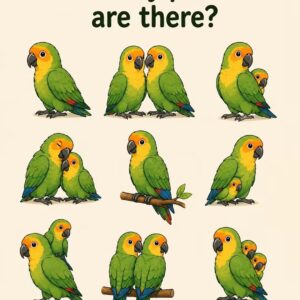
Counting puzzle with green parrots asking how many parrots are there

How Many Parrots Are There? Count Them Carefully

This visual counting puzzle asks a simple question: How many parrots are there? The challenge comes from the smaller parrots that are partly hidden behind larger birds….

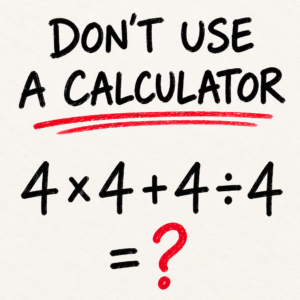
Math puzzle showing 4 × 4 + 4 ÷ 4

4 × 4 + 4 ÷ 4: Can You Solve This Without a Calculator?

This quick math puzzle looks simple, but it still catches people who ignore the order of operations. The expression is: 4 × 4 + 4 ÷ 4…

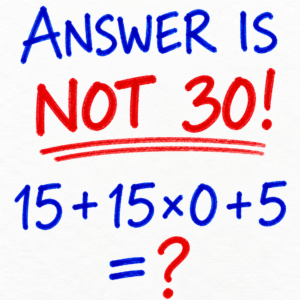
Math puzzle showing 15 + 15 × 0 + 5

15 + 15 × 0 + 5: The Answer Is Not 30 — Can You Solve It?

This puzzle is designed to make you add too quickly. The expression is: 15 + 15 × 0 + 5 According to the order of operations, multiplication…

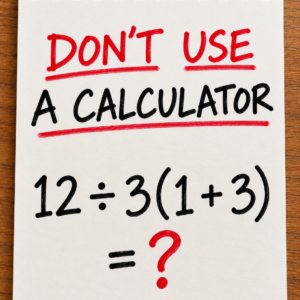
Math puzzle showing 12 ÷ 3(1 + 3)

12 ÷ 3(1 + 3): What Is the Correct Answer?

This equation is a classic source of arguments because the notation can look more confusing than it really is. The expression is: 12 ÷ 3(1 + 3)…

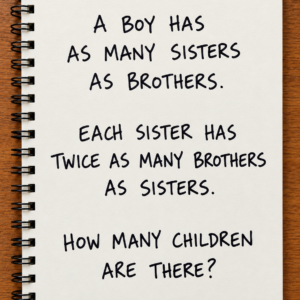
Family riddle about a boy having as many sisters as brothers

A Boy Has as Many Sisters as Brothers — How Many Children Are There?

This family puzzle takes a little algebra, but the wording gives you everything you need. Suppose there are b boys and s girls. For a boy, the…

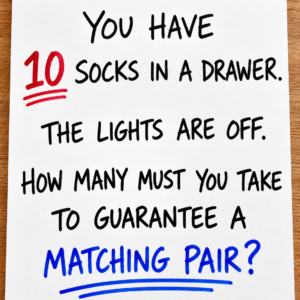
Riddle about taking socks from a dark drawer to guarantee a matching pair

10 Socks in a Dark Drawer: How Many Guarantee a Matching Pair?

This drawer puzzle depends on what we mean by a matching pair. The usual interpretation is that the 10 socks form 5 distinct pairs. In the worst…